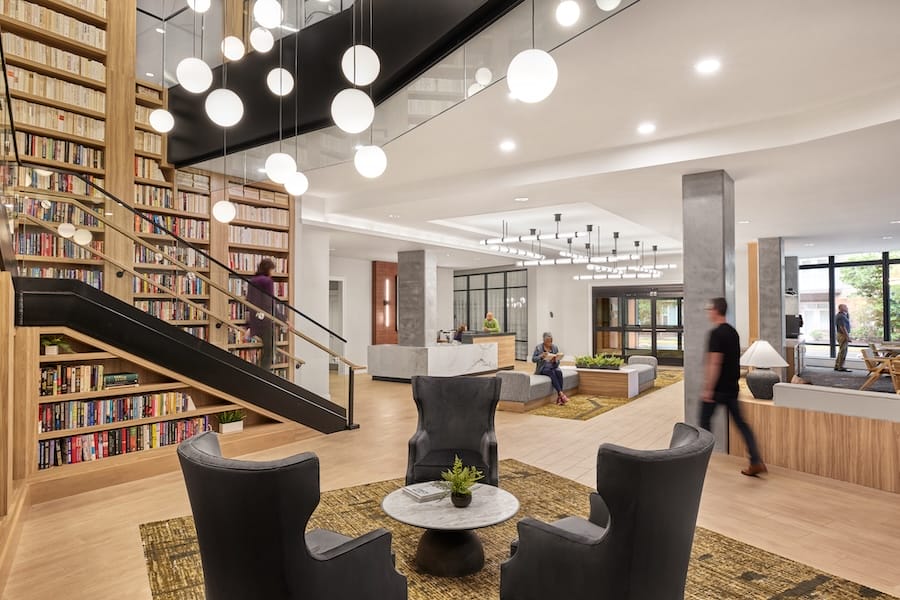
A new generation of older adults is redefining the expectations of aging, and senior living communities are evolving to accommodate them. Residents have healthier, more active, and more digitally connected lifestyles than those of previous generations. With many living well into their 90s and beyond, their needs span everything from social activity to independence and memory-supportive environments.
As senior living communities brace for the impact of the “Silver Tsunami,” the scale of this shift is becoming clear. The oldest Baby Boomers will turn 80 this year and by 2030, every member of this generation will be 65 or older. About 70 percent of older adults are expected to need some form of long-term care during their lifetime, while the demand for senior housing continues to outpace supply by more than two to one. These converging forces underscore the need for environments that prioritize quality and experience, not just capacity.
Architects and designers play a key role in responding to the diverse lifestyles of older adults, creating communities that holistically address sensory, cognitive, and physical changes while supporting autonomy, dignity, and quality of life at every stage.
Designing for Independence and Well-Being
Independence remains a top priority for many older adults, and thoughtful design is what sets apart the communities that support autonomy from those that provide the basics. The ability to live independently hinges on design considerations that anticipate physical, sensory, and cognitive needs. Features such as wayfinding, adaptable furniture, accessible bathrooms, and well-planned lighting all contribute to an environment where residents can move, interact, and engage confidently.
Helping residents sustain their independence starts with accommodating the daily challenges that come with aging. For instance, hearing loss affects a large percentage of people over 80, which means acoustics are critical. In practice, this takes the form of smaller dining tables, strategic material selection, and sound-absorbing finishes that help residents stay involved in conversation rather than withdrawing due to difficulty hearing. Vision changes also influence design decisions, with the need for clear wayfinding, intentional color contrast, and appropriate lighting to help residents navigate confidently and safely. Within private residences, even the smallest details matter, from curbless showers, discreet grab bars, and space for assisted movement to reduce hazards.
For seniors experiencing early cognitive decline, environments that promote a sense of calm and consistency are essential. One way to achieve this is through design features that simplify and improve daily cues, including glass-front cabinets and open shelving that keep familiar items visible, and circadian-rhythm lighting for regulation of sleep patterns to ease potential evening agitation. Another added layer of comfort is the incorporation of biophilic design through natural materials, plant life, and nature views, which come together to create soothing spaces that bring cognitive clarity, especially for residents who spend most of their time inside.
Alongside physical and environmental design, technology plays an important role in daily life, especially with technology-adept Baby Boomer and Gen X residents. Fall-monitoring systems, digital communication tools, and app-based health platforms help staff respond quickly, allowing seniors to live independently while still having access to on-demand health services when necessary. Many of these tools mirror the smart-home systems that these older adults already know well, but are adapted with accessibility as the sole purpose. Taken together, these physical, sensory, cognitive, and technological elements form a holistic approach to independence where residents feel equally safe and empowered to live life on their own terms.
Senior Living in the Heart of Community
Traditional senior living models, often removed from broader community life, are no longer the only choice for residents who want more options for engagement and connection. Older adults are increasingly seeking settings that integrate recreation, culture, and everyday conveniences, which are often found in urban centers, repurposed shopping districts, or near college campuses. By situating communities in or near walkable, amenity-rich neighborhoods, residents maintain connections to local life and benefit from close access to dining, retail, and entertainment without relying on the offerings provided on-site. It’s this integration that supports wellness and combats the feeling of isolation that can stem from a more insular environment.
This idea of connection also extends to the amenity options offered in these communities. Game rooms with golf simulators, pickleball courts, foosball, and video games provide spaces for residents to interact with their visiting relatives and fellow residents. Combined with social lounges and adaptable gathering areas, these spaces create movement and social connection throughout the day. When communities are designed around residents’ interests and needs, these communal spaces become opportunities for engagement that make every day purposeful and fulfilling.
For many residents, intellectual stimulation and opportunities for personal growth are just as important as comfort and convenience. According to a survey by AARP, about 55% of Americans age 45 and older are actively engaged in lifelong learning with plans to continue as they age. This desire for personal growth is driving the development of senior living communities near or directly on college campuses, creating opportunities for educational exchanges between generations. In these settings, senior residents can participate in campus life while sharing their experience and insight with younger generations through mentorship, classes, musical performances, art exhibits, and communal meals. This exchange enriches both groups, and as universities face enrollment and financial pressures, more of these models are on the horizon to activate campus spaces and create intergenerational programming.
Communities That Honor Individuality
Senior living is not and never was one-size-fits-all. Communities that truly honor individuality recognize that each resident brings a lifetime of experience, interests, and connections. Through a combination of adaptable spaces, technology that supports independence, and flexible services delivered as needed, senior living developments bring dignity, confidence, and choice to their residents.
Alongside meeting daily needs, thriving communities cultivate meaningful connections with neighbors, the community at-large, and across generations. From shared meals and lifelong learning programs to recreational spaces where grandchildren and young adults interact, residents can choose their own adventure, whether they prefer mental or social stimulation. By designing with care, considering choices like lighting, acoustics, wayfinding, and biophilia, it makes these adventures accessible, restorative, and joyful.
Looking ahead, modern senior living communities have the opportunity to be more than a place to live, they can become platforms for growth and fulfillment. This means the future of senior living will be about embracing individuality, nurturing community, and designing spaces that let people thrive today, tomorrow, and for every stage of today’s extended lifespan.

Cynthia Shonaiya
Cynthia Shonaiya, AIA, LEED AP, is Principal, Senior Living & Affordable Housing Studio Leader for Hord Coplan Macht.